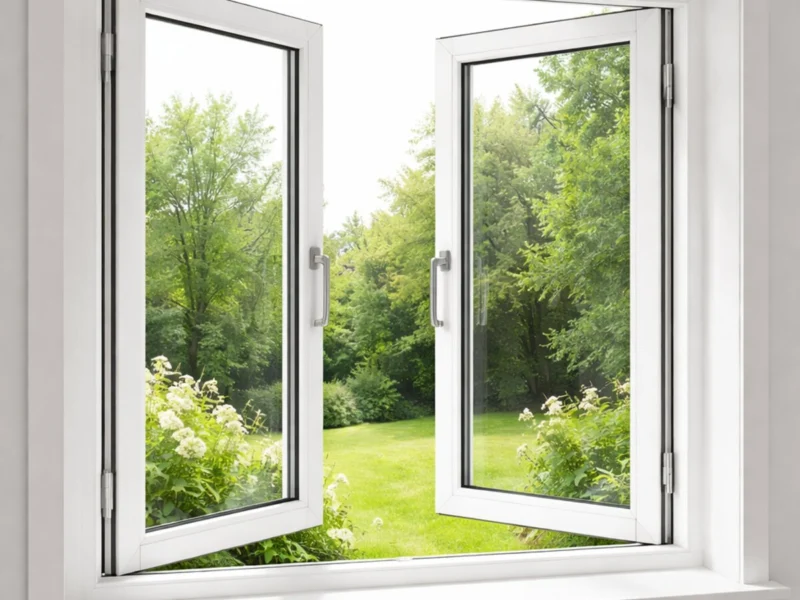
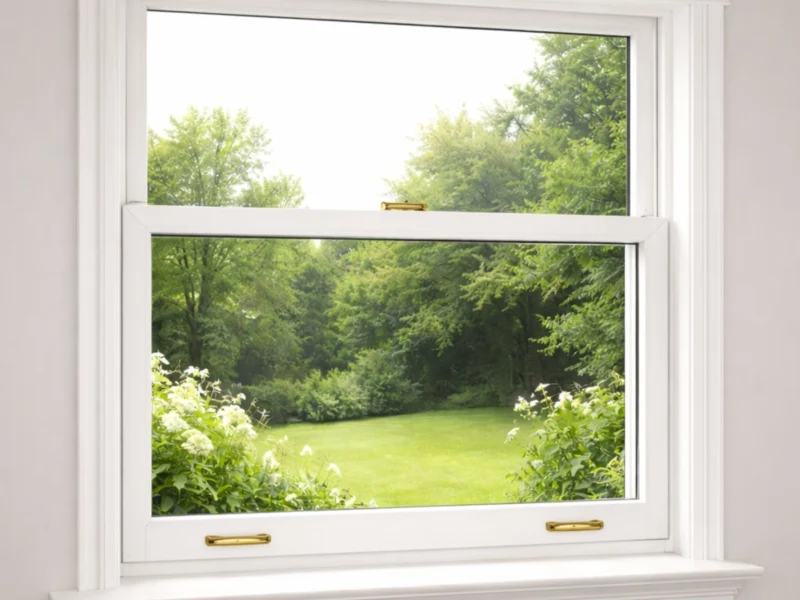
Is a composite or uPVC front door better?
A composite front door may suit you if you want a particular panel design, finish and solid-door appearance. A uPVC front door may suit a straightforward, low-maintenance replacement with the glazing layout you need. Compare the complete doorset, not just the material name: construction, security evidence, insulation, threshold and fitting determine whether it is right for your home.
The front door is something you use several times a day. It needs to look right, but it also needs to close properly, give you the privacy you want and work with the entrance you already have. Start with those needs before choosing a colour or handle.
What is the difference between composite and uPVC doors?
A composite door combines different materials within the door leaf. Depending on the range, the core may contain foam, timber or a combination of materials, with an outer skin chosen for the construction. Composite does not mean every door has the same core.
A uPVC doorset uses a uPVC frame and door construction with panels or glazed sections. Reinforcement, panel specification, seals and hardware vary between systems. The outer frame of a composite doorset may also be uPVC, so a white frame does not tell you which door leaf is fitted.
| Detail to compare | Composite front door | uPVC front door |
|---|---|---|
| Construction | Ask for the named range, core and outer skin. | Ask for the profile, reinforcement and panel or glazing specification. |
| Appearance | Compare panel designs, texture and decorative glass. | Compare panel layout, frame proportions and glass options. |
| Performance | Check evidence for the complete doorset. | Check evidence for the complete doorset. |
| Everyday care | Follow the instructions for its particular skin, finish and hardware. | Follow the instructions for the profile, panels, seals and hardware. |
Our composite door guide explains the construction choices in the ranges we offer. You can compare those with our uPVC door options.
Which front door is more secure?
A material label is not a security test. Look at the whole doorset: the leaf, frame, cylinder, locking points, hinges, glass and the way it is fitted.
Ask which security standard or certification the proposed doorset has been tested to, and whether the evidence covers the exact configuration you are buying. Decorative glazing, sidelights and hardware changes should be considered as part of the specification.
For everyday use, try the lock and handle arrangement. Check whether you need a key to lock from outside, how the door opens from inside and whether the handle is comfortable to reach. Tell the surveyor about any particular access or security concerns rather than assuming one arrangement suits everyone.
Will a composite door keep my hallway warmer?
A well-specified, correctly fitted replacement can reduce draughts and heat loss, but either material needs to be assessed as a complete product. Compare the whole-doorset U-value for the proposed size and glass arrangement. Lower values indicate less heat passing through.
Seals, the threshold, letterbox and the joint between the frame and the building also matter. If cold air is coming around an existing frame, explain where you feel it. A new door will not resolve a separate damp problem or poorly insulated wall.
Choose the amount and position of glass around privacy and daylight. Obscure glass can admit light while limiting a clear view through, although its effect varies with the pattern and lighting.
How do I choose a door that suits the house?
Look at the entrance from the pavement, then from inside the hallway. A door that looks right in a close-up may feel different beside the brickwork, porch, windows and neighbouring doors.
- Decide whether you want a traditional panel pattern or a simpler contemporary face.
- Consider whether the inside and outside need the same colour.
- Plan the glass, sidelights and any top light together.
- Check the handle, letterbox, knocker and house-number positions.
- Make sure the opening direction leaves the hallway usable.
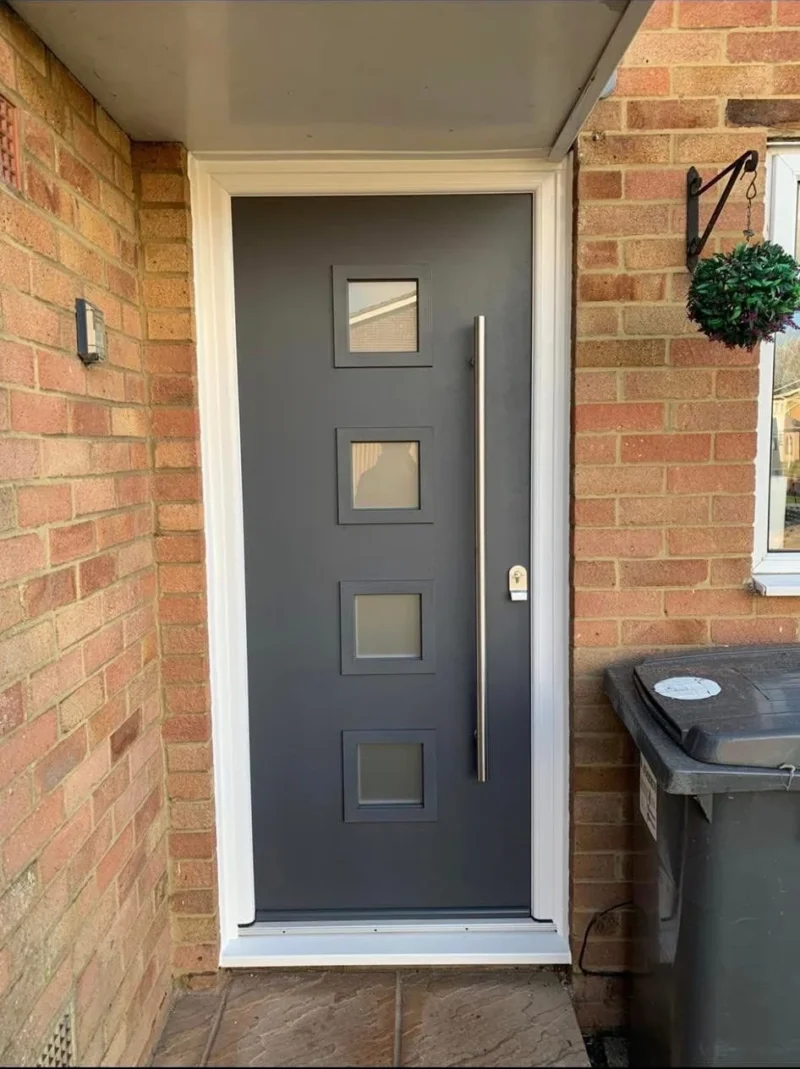
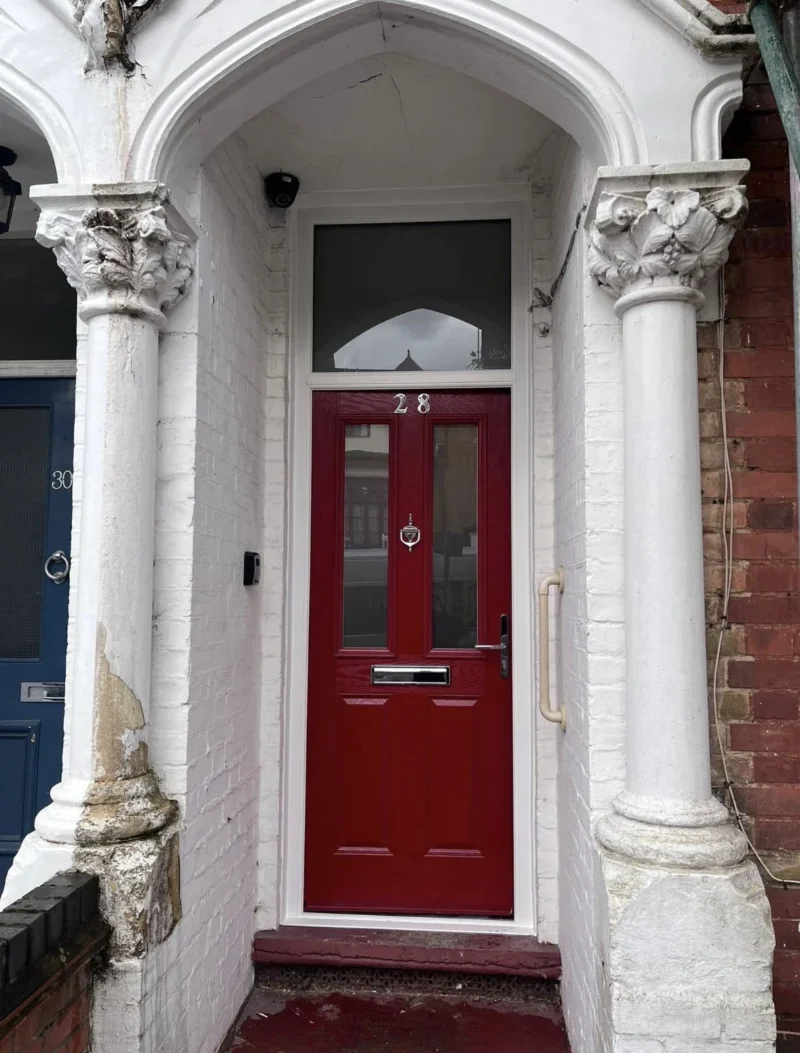
The installation photographs in this guide show different entrance styles from our Pristine gallery. Use them to explain the look you like; the photograph alone does not establish the internal construction or performance of a door.
What should I compare in the price and maintenance?
Ask for fitted quotations for the same opening and scope. The door range, glazing, sidelights, finish, threshold, hardware and work around the frame can all change the total. A headline price for a door leaf is not directly comparable with a complete installation.
Confirm fitting, removal, disposal, making good, VAT and any exclusions. Ask for the product warranty terms and clarify which parts cover glass and hardware.
Neither choice should be treated as maintenance-free. Clean the door using products permitted for its finish, keep drainage paths clear and follow the care instructions for locks, hinges and seals. Avoid painting, abrasive cleaners or adjustment work unless the manufacturer permits them.
If the existing door is sticking, leaking or letting in draughts, explain those symptoms before deciding replacement is necessary. The cause and condition of the complete entrance should guide the next step.
Common questions
Do all composite doors have a timber core?
No. Composite-door construction varies by range. Some use foam-filled cores, others use timber or a combination of materials. Ask for the named product and construction rather than assuming the word composite describes one design.
Can a uPVC front door be secure?
Yes, a suitably specified doorset can provide effective security. Check the test evidence, locks, hinges, glazing and fitting for the exact product. Comparing the material alone will not tell you how secure the complete entrance is.
Can I replace the door without changing the frame?
That depends on compatibility and the condition of the existing frame. Do not assume a new leaf will fit or perform correctly in an old frame. A survey should establish whether the door and frame need replacing together.
How do I get a useful front-door quotation?
Provide your postcode, describe the existing entrance and explain your priorities for light, privacy, appearance and access. Mention any sidelights or top light. Photographs can help the initial discussion, with final measurements and suitability confirmed at survey.
Need help narrowing down your front-door options?
Use our contact form to tell us what you would like to improve and your project postcode. Our Wickford team can talk through suitable door options and the next survey or quotation step, without you having to choose every detail first.